You are probably reading this because you know a widow and you want to be kind to her.
Let me start by saying what a blessing you already are to the widow you know! If you are looking into ways to make her feel loved and seen, I can almost guarantee you are already a source of comfort during this time of her life.
In his second letter to the Corinthians, Paul writes, “Blessed be the God and Father of our Lord Jesus Christ, the Father of mercies and God of all comfort, who comforts us in our affliction, so that we may be able to comfort those who are in any affliction, with the comfort which we ourselves are comforted by God.”(2 Corinthians 1:3-4)
Did you catch that? God, the Father of mercies, comforts us SO THAT we can comfort others. Because we have received this mercy, we are called on to share it.
Comforting a widow in her distress requires action on your part. Of course, there are many meaningful things you can do for a widow, but let’s start with the simplest action you can take.
You can do it together over coffee or miles away over the phone. You can do it in a group or one-on-one. You can do it in five minutes or over an afternoon. The first and most basic way to comfort a widow is to talk with her about her loss.
Now, that can be tough. It can be hard to know what to say and what not to say.
Too often, the fear of saying the “wrong” thing means people don’t say anything at all. The problem with that is that it leaves the widow even more isolated in her pain. Ignoring the pain doesn’t make it go away, it makes it worse.
”Comforting a widow in her distress requires action on your part.
So, the first step is to say something.
Start by acknowledging her loss in simple ways like:
Join the "No Widow Alone" Movement.
You don’t have to be a widow to have an impact on her life.
As much as the words of others can give comfort in our affliction, words can also wound during times of great pain.
In our work with thousands of widows, we have found that there are a few things you should avoid saying. For example:
By saying (or not saying) these things, you will be providing comfort from the Father of mercies.
Stand in the Gap for Widows is on a mission to leave no widow alone.
With your gift, Stand in the Gap for Widows provides materials and support to widows ministries around the world.
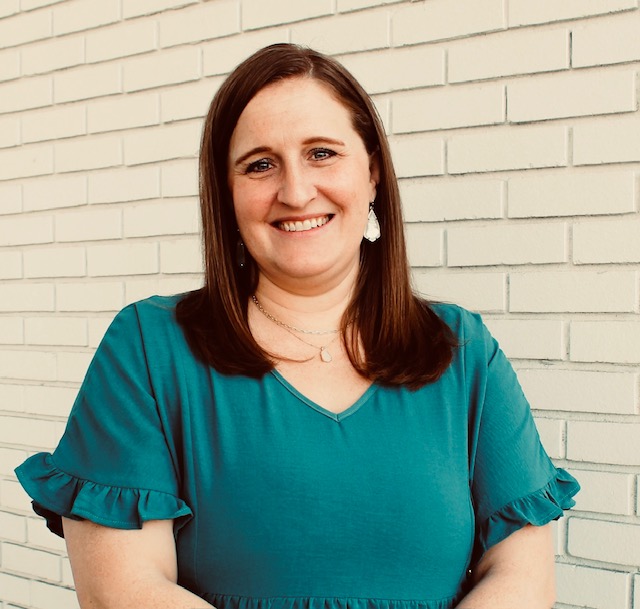
Amy Woody
Amy walked the journey of widowhood in May of 2016 when she was only 36 years old. Since then, God has walked with her through much darkness and reminds her daily that He is the ultimate provider of light. Amy has been the Director of the Stand In The Gap Ministries for Widows program since October of 2021. God brought her remarriage to her husband, Brian. She lives in Morris, Oklahoma (with 3 cats, 3 dogs, 5 ducks, and 5 chickens) and loves spending time with her family and college-aged daughter and enjoying the beautiful world God created. She has an abundance of gratitude for what God has brought her through. She wants everyone to know that God can use your hurt to allow you to help others and that He has a plan for your life!